Same Recipe But Different Dish

If someone we consider a successful person gave their younger self the exact instructions to follow to be equally successful as today, they wouldn’t be able to do it. Not unless they had the context of the journey and mistakes made along the way. We cannot remember much of the nuance between decisions we make, so any kind of “recipe” for success would essentially be incomplete. 

  For example, during a Vietnam episode of “No Reservations,”  Anthony Bourdain introduced us to a lady who would cook a giant pot of Pho from the same recipe daily for over 20 years. Still, as experienced by Bourdain, the taste would be different each day. Same cook, same recipe, but other soup each time.

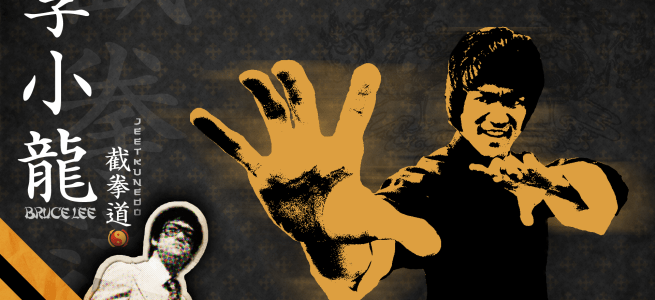
  Similarly, in the movie “The Karate Kid,” waxing on and off the car turned Daniel-san into a physically capable martial artist. And this was after doing the tedious work each day. As I noticed with my martial arts training, the physical movements might be the same. Still, so many things are happening on more profound levels of physiology and psychology. As Bruce Lee might observe, no two punches are the same. And this is probably the reason why different students progress at different rates. Other students, same training, yet different (but not any less valuable) results.

  Heraclitus once said, “We can never step into the same river twice.” The river is always different because it’s moving. And we are always different because we are growing. Maybe it is essential to examine why we follow certain things closely. I’ve fucked up cooking eggs by repeatedly following the same recipe, but I’ve also had good egg days. And yet, for some reason, I have difficulty explaining everything I did when it happened “correctly.” 

No two recipes are alike, even if the (even skilled) cook is the same. Why should we judge ourselves when things don’t work out, even after ” following the recipe” and doing everything we thought we should?
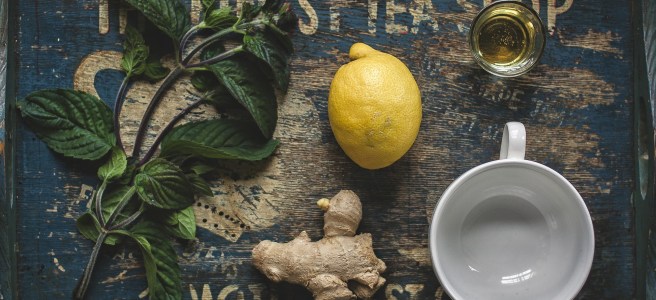
Empty your cup

Photo by Leon

There is a saying: “How can you enjoy my tea when your cup is already full?”

It’s difficult getting to know someone if we avoid interacting with them because of an assumption or–alternatively–talk to them only to make them fit into our preconceived notions. Every once in a while, we might be absolutely right about someone. But more than often, I’ve been surprised at how wrong I’ve been about people; to the point of embarrassment. This is one of the reasons why I try to talk with as many people as possible (when appropriate). You don’t have to be as extreme as me though, it’s more important to remember that it’s easy to be wrong even about the people closest to us; imagine how often we can be wrong about people of an even greater degree of separation? Try and see how much you can prove yourself wrong, and start dialogue with others.

To taste all the teas and experience the flavors, but first we must empty our own cup of notions.


Honest Self Expression

Honestly expressing yourself…it is very difficult to do. I mean it is easy for me to put on a show and be cocky and be flooded with a cocky feeling and then feel like pretty cool…or I can make all kind of phony things, you see what I mean, blinded by it or I can show you some really fancy movement. But to express oneself honestly, not lying to oneself…now that, my friend, is very hard to do. –Bruce Lee

Is it exhausting to express ourselves? It is for me when I try to censor myself.

There are many steps between feeling an emotion and how we express it.

Taking an emotion that changes so constantly and trying to snapshot it with words, colors and/or music is already difficult enough.

Further processing how we feel into a socially acceptable package, and diluting the language to avoid offending others is tiring; and a disrespect to ourselves.

Say what you want and deal with the consequences. The truth will either strengthen meaningful relationships, or weaken superficial ones.

We are not living if we are not polarizing, embarrassing, exciting–anything. Don’t be a living corpse because you stopped expressing honestly.


Be Like Water

Bruce Lee would’ve been 78 yesterday. So to commemorate his birthday, I wanted to talk about one of his most popular sayings, of being “like water.”

Water can represent so many things: it is ever-present in our ecosystem. It can change shape from solid to liquid to gas. It moves everywhere, through many things, without doing much. It has no form, which then allows it to take the shape of anything.

In Taoism, this malleable form of water is what makes it such a common metaphor for the universe. There are many things in play in the universe – undiscovered energies, planets, stars, etc. And we as humans are also a part of this vast universe. It is no secret that one of humanity’s greatest strengths is the ability to adapt and survive. We’ve developed technology, communication and culture to find various ways to survive over the years — all products of adapting to the changing environment.

I feel that one of the things Bruce Lee talks about while advising us to be like water, is to be malleable so that we can adapt to life and its challenges. If we are complacent and rigid in our life, we take away our greatest strength as humans, and subject ourselves to a life of suffering. But to be formless means that nothing (external) defines you. You define you, nothing else. Then, our ego is minimized and we become capable of living to the capacity of our full potential. We become more aware and more powerful: two things that I would wish for everyone to be.

@itsjayram