
Hello everyone! First, I’d like to thank my friends who’ve followed my blog for quite some time. It wasn’t meant to be much other than a place to share some thoughts and practice my writing. But over the years of having this blog, I’ve begun to see how the way I type and the content of my pages differ so much. In some of the posts I read, I couldn’t have imagined what was happening in my mind then. It could’ve been that a driver cut me off, and it triggered something else that was fermenting away in my brain. All the years of writing have shown me my shortcomings and what I need to work on.
Nonetheless, all those versions of me added layers to the person I am today, and from now, perhaps a decade, I will see the pretentiousness and shortcomings of this post. But the most important thing I wanted to say is that very few things stick with your life over the years. Sometimes, we take things for granted because they become as normal as breathing air. But when you lose that thing or person, it is hard to remember a time without them. So I wanted this moment to thank you. You are not invisible and are an essential part of my life. Perhaps when I was younger, I thought I lacked things and needed to find ways to validate myself and my feelings. Even though I had people give me good advice, it still couldn’t save me from the trials and difficulties of growth as a human being. But eventually, I began to find that I rarely saw what I was looking for. As the philosopher Alan Watts once said, “Not all humans really know what they want.” It’s safe to say that if we ask for things without knowing what we want, we leave living our lives up to chance. Or so that’s what I used to think. There is a certain rhythm to life. The rain flows into the rivers, and rivers carry us into the ocean. I always thought I needed to be doing something, but everything was already done. You all have been excellent and here’s to many more years of writing and living life.
Same Recipe But Different Dish

If someone we consider a successful person gave their younger self the exact instructions to follow to be equally successful as today, they wouldn’t be able to do it. Not unless they had the context of the journey and mistakes made along the way. We cannot remember much of the nuance between decisions we make, so any kind of “recipe” for success would essentially be incomplete.
For example, during a Vietnam episode of “No Reservations,” Anthony Bourdain introduced us to a lady who would cook a giant pot of Pho from the same recipe daily for over 20 years. Still, as experienced by Bourdain, the taste would be different each day. Same cook, same recipe, but other soup each time.
Similarly, in the movie “The Karate Kid,” waxing on and off the car turned Daniel-san into a physically capable martial artist. And this was after doing the tedious work each day. As I noticed with my martial arts training, the physical movements might be the same. Still, so many things are happening on more profound levels of physiology and psychology. As Bruce Lee might observe, no two punches are the same. And this is probably the reason why different students progress at different rates. Other students, same training, yet different (but not any less valuable) results.
Heraclitus once said, “We can never step into the same river twice.” The river is always different because it’s moving. And we are always different because we are growing. Maybe it is essential to examine why we follow certain things closely. I’ve fucked up cooking eggs by repeatedly following the same recipe, but I’ve also had good egg days. And yet, for some reason, I have difficulty explaining everything I did when it happened “correctly.”
No two recipes are alike, even if the (even skilled) cook is the same. Why should we judge ourselves when things don’t work out, even after ” following the recipe” and doing everything we thought we should?
Crowds v Individuals
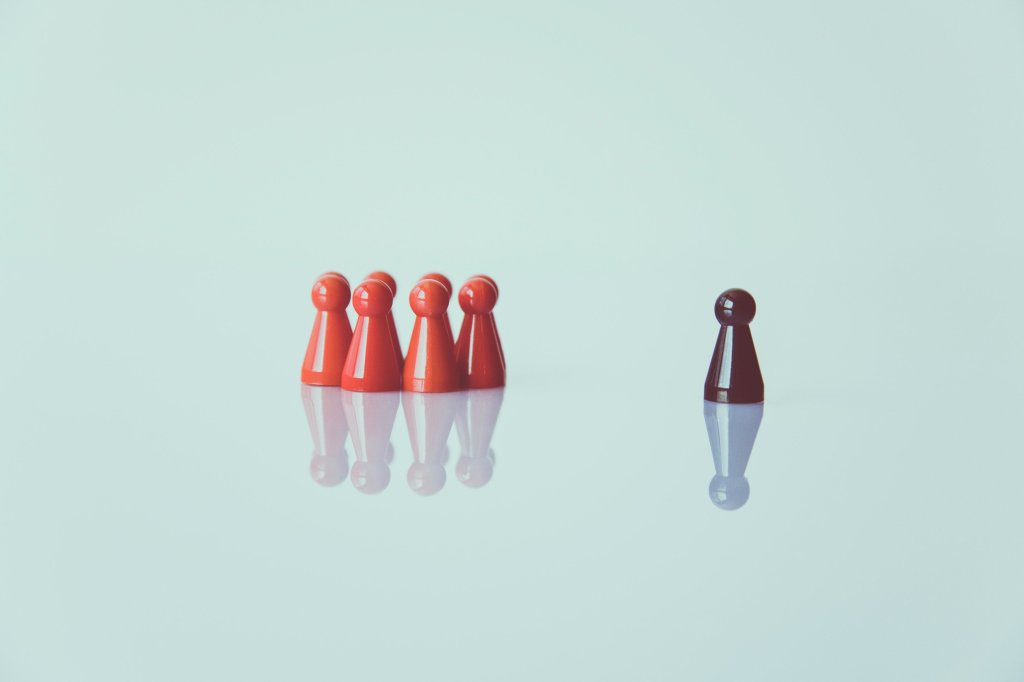
Is it ignorant of us to look at small, positive things when a global pandemic is going on? Maybe it’s more acceptable to talk about the latter because it helps us relieve our anxiety by joining the panicked crowds. If we focus on the bad, we don’t have to change how we’ve always done things; instead, we should follow what everyone else is doing and feeling. We buy stuff because others believe it. We feel our spirits dampen because everyone else’s is too. We feel more connected to others because we think we feel similarly. But this is an illusion.
To think differently from the crowd requires us to be more accountable to our emotions and logic. Yes, things seem wrong, and rightfully so. But do our actions contribute to improving things or just joining everyone else in the hysteria? Solutions are found by thinking differently from the crowds where the problems emerge, and this begins by looking at the positive things that people easily ignore.
Removing The Knife

We each have good and bad days, but lately, even the good days seem overshadowed by some virus dread. Most days now, I might wake up feeling positive–that things are getting better–but towards the evening, I worry if things will worsen. After a few days of this anxiety, I exhaust myself so much that I barely have the energy to think clearly, and I can imagine others feeling similarly. So, I’ve been trying to use more logic in these emotionally trying times. Here’s the best I could come up with so far:
Fear makes us aware that we can be harmed when a situation becomes challenging. If broken, pain tells us that we can do something about it. But if we choose irrationality, it will say to push the knife all the way through to take it out. And suffering is the resulting consequence of the choices we make.
If we pause to act rationally, we realize that the knife doesn’t need to go deeper. We can assess and act accordingly. But if all we focus on is trying to remove the knife in any way possible because of the pain, we might do it in the worst way possible: pushing it all the way through, even though there are many better ways. As Mike Tyson was famous for saying, “Everyone has a plan until they are punched in the mouth.” When we are in pain, it’s challenging to remain coherent. But if we accept pain as part of our lives, we can learn to respond–and not just react–whenever we feel it.
Time Slows, Never Stops
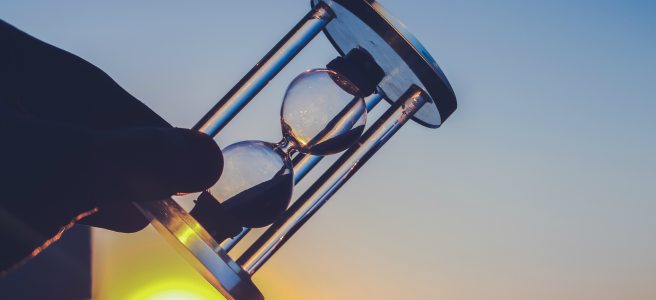

The world is not ending, but it is slowing down. Many of us haven’t had the chance to experience living at a slower pace until now, so the transition many of us are going through is shocking. Maybe we struggled to stay positive before, and now there is less hope. But when things slow down, it forces us to look at details. Many of us were looking for happiness outside ourselves in the form of distractions…but now, since we are all at home, we have no choice but to come to terms with ourselves. Some of us would instead not look inside ourselves and sedate ourselves at home with food, drinks, or entertainment while biding our time. But choosing entertainment over self-educating comes with a couple significant costs. The first is that we spend valuable time entertaining ourselves versus knowing ourselves. We wouldn’t have changed much coming out of this virus quarantine panic, and when things finally blow over, we will return to life the same. And then the next crisis, the same pattern. But those who choose to learn during this crucial time fortify themselves as independent people who unwillingly become the source of help and positivity during the next crisis. The second cost is health, which erodes with anxiety. If we are already cooped up, uncomfortable, annoyed, exhausted, and everything, not knowing when this quarantine will end will make it seem like the feelings we have now will also last indefinitely. In this sense, the environment in the head becomes much worse than the epidemic we face. Things are slowing down, but far from ending. We need a breather to become accustomed to what it feels like to not live a rushed, routine life. As the saying goes, “The devil is within the details.” This is a rare chance for many of us to examine our lives in detail and maybe also absolve some demons that plagued us even before this plague.
You can be anything. And you choose to be this.


Is the title statement full of judgment or praise? Our choices can really change the way we see things. It depends a lot on what a person feels; feelings often change. At any moment, we can turn things around. Or we can continue down the same path.
For this reason, life is seldom a linear journey. We can be anything: kind, but we worry about suffering. So we become suffering. Open, but we worry about our feelings being exploited. So, we become exploited victims. Happy, but we fear for how long? And so we become uncertain. Pick one and cast away the other.
Open Hearts, Open Hands


If we spend time being angry at irresponsible people for not acting mindfully in crisis, we become distracted from being helpful ourselves. It’s really wasteful to use precious energy being frustrated and angry at the selfish and ignorant actions of others; ugliness is often obvious, and it doesn’t need a hype-man. Shaking closed fists angrily at injustice has its place, but during a time when friends and loved ones suffer uncertainty, be an open hand. An open hand comes from an open heart, and becomes a place of giving and receiving; a place of no ego. We all are in need of something, and can always give something. Try to keep both heart and hand open, and let’s overshadow ugliness with action.
The Panic Of 2020


So many of us, since grade school, grew up taught the the idea that it’s important to make a difference. It’s one thing to hear about the great deeds of people like FDR, Dr. King or Gandhi during difficult times; but it’s another experience to be a person who acts consciously when things are difficult. The greatest difference is made during times of difficulty, because kindness becomes a scarce commodity. A great deed can be just calling a friend, to see if they are okay. It could be posting on social media where supplies are still available, and offering to pick some stuff for others. It could be picking up and donating excess supplies to senior communities.
Every act from kindness is a source for greatness. Instead of shaming the people who are acting impulsively and adding fuel to the fire, perpetuating the story of how the world has gone crazy, I suggest another solution: be courageous enough to be the sanity in this passing storm. Because when it all eventually subsides, we will have to look at ourselves and either regret, or be proud, of the people we acted as.
Ahimsa Is The End
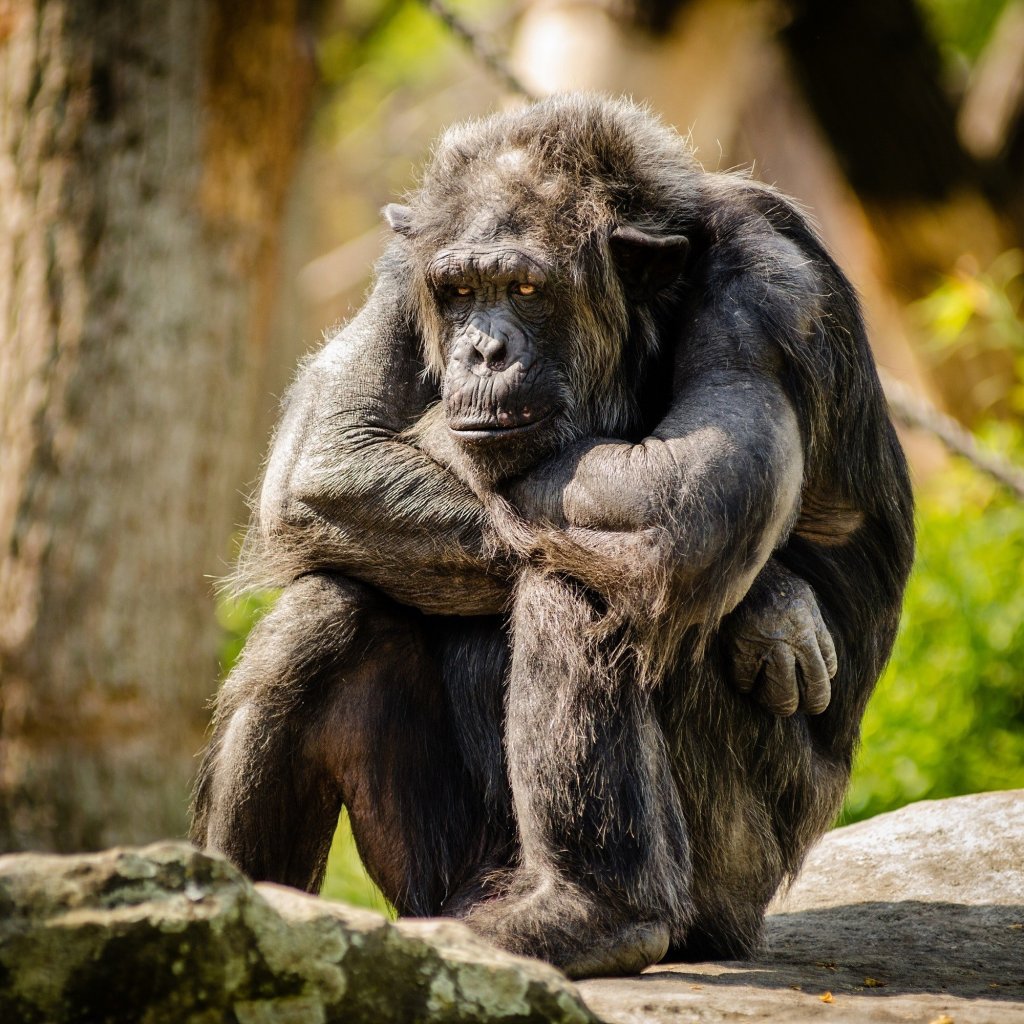
When M. Gandhi or Dr. King spoke of civil disobedience, they were greatly aware of the consequences of “an eye for an eye.” It does make the whole world go blind, but not just literally.
There’s a well known experiment in which monkeys in a cell were given electric shocks each time one of them tried to climb a ladder for a banana. This eventually conditioned the monkeys to prevent (even resort to fighting) anyone else who would climb the ladder. One by one however, each monkey was replaced with a new one; until the entire lot was of new monkeys. The electric shock was removed as soon as the first one was replaced, but the memory was already conditioned into reactionary behavior. So now, when one of the monkeys climbed for the banana, even though the electric shock was removed, the monkeys would fight out of reaction instead of reason.
Everyone was fighting and the reason was long forgotten. If we keep seeking revenge long enough, or fight with ourselves for a long enough time, we often become blind to the reason we started in the first place. An eye an eye, but why was the first one taken? Most of the time, the thing we believe taken from us is often still within our possession.
Pricking The Thorn

If you were pricked by a thorn, would you touch it again? Or would the pain the first time be enough to stop you from doing it again? Most of us would be smart enough to learn the first time. But most of us also choose to think about things repetitively that have caused us suffering. If we experience some kind of pain like the thorn, we have the nerve endings to experience it once and learn from it. But to continually do so will be extremely uncomfortable. There will eventually be blood loss, your finger will develop a gradual numbness to the anticipated pain. There will be a scar. Your body will send white blood cells, platelets and everything else required to help heal it. But if we don’t allow time for healing, we cannot expect to heal.
Stress is a really big factor in our society today. Stress depletes the immune system so much, and takes away time from doing the things we wish we were doing. It creates resentment and absence in the lives of others we care about. It’s a lingering virus that erodes us away faster. And the cause of the virus is most often recurring painful thoughts that we have yet to lay to rest. They are the thorns you keep pricking your finger on, disallowing healing into our lives.
 @itsjayram